The quiet luxury capsule wardrobe 2026 is not a trend. It is a methodology — a deliberate approach to building a wardrobe around permanence rather than novelty. Where fast fashion demanded constant replacement and logo-heavy luxury signalled wealth through visibility, the quiet luxury framework operates on a different premise entirely: that the most considered dressing leaves no obvious trace of effort. This guide covers twelve foundational pieces that form the structural core of a quiet luxury capsule wardrobe in 2026, explains why each piece earns its place, and gives you a practical framework for building this wardrobe in stages rather than all at once. Whether you are starting from an empty wardrobe or editing an existing one, these principles apply.
What Quiet Luxury Actually Means in 2026
The phrase has been misused often enough that it is worth defining precisely before applying it. Quiet luxury in 2026 is organised around three principles that separate it from its predecessors and from cheaper imitations.
Permanence of silhouette. A garment built on a permanent silhouette reads as correct regardless of what is trending in a given season. Tailored trousers with a clean straight leg, a wrap dress that follows the body without demanding attention, a blazer cut to the shoulder — these silhouettes have not dated in forty years and will not date in the next ten. The quiet luxury position is that silhouette is more important than surface detail.
Material honesty. Quiet luxury does not use fabric to imitate something more expensive. A blouse made from well-woven crepe is more honest than a blouse made from polyester cut to look like silk. Material honesty means the construction and the fabric quality match, and that the garment does not rely on surface finish to disguise poor underlying construction.
Contextual fluidity. Each piece in a quiet luxury capsule wardrobe 2026 should function across at least three distinct contexts without alteration. A garment that works only at a formal event is not a capsule piece — it is a costume. Contextual fluidity means the piece earns its physical and financial space by adapting to the demands of your actual life.
The 12 Foundational Pieces
These twelve pieces are not ranked by importance. They are organised by how they layer within the wardrobe — starting with the pieces that carry the greatest contextual load and moving toward more specialised investments.
1. The Tailored Straight-Leg Trouser. The single piece that delivers the most versatility per square inch of wardrobe space. A well-cut straight-leg trouser in a neutral — stone, charcoal, deep navy, or ivory — pairs with almost everything in a quiet luxury wardrobe. The critical specification is the waistband: it should sit at the natural waist, lie flat, and have no visible hardware. Pockets should be functional, not decorative. Look for a crease that holds through light wear.

2. The Silk or Silk-Equivalent Blouse. Not a fast-fashion blouse in a blouse silhouette — a properly constructed blouse in a fabric with real drape. The collar and cuff should be interfaced so they hold shape without starch. The hem should be long enough to tuck fully without pulling out mid-day. A blouse at this specification carries from morning meetings through evening events without reading as casual or overdressed.
3. The Structured Wool Blazer. One blazer, in a neutral that does not exist in your trouser collection. If your trousers lean charcoal, your blazer should be camel or ivory. If your trousers are navy, consider a mid-grey blazer. The chest should sit flat. The sleeves should break at the wrist correctly, not at the knuckle. The lining should extend fully — a half-lined blazer will not hold its shape over five years of wear.
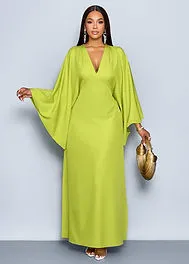
4. The Column or Sheath Dress. The column dress is the single most efficient piece in a formal capsule wardrobe because it is already a complete outfit. In a mid-weight fabric — a quality ponte, a structured crepe, a heavy jersey — it moves from a business context to a dinner context without requiring additions. The colour should be one you will not tire of: classic black, deep burgundy, or a saturated jewel tone rather than a pastel.
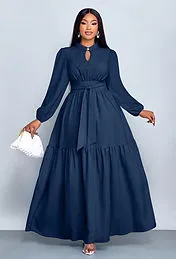
5. The Longline Coat. A coat of knee length or below in a substantial fabric — wool, wool-cashmere blend, or a structured twill — is the piece that frames every outfit worn beneath it. The investment case for a longline coat is stronger than for almost any other garment because it is worn on every cold-weather day and changes how the entire outfit reads. Choose a cut that falls cleanly from the shoulder without cinching at the waist.
6. The Wide-Leg or Fluid Trouser in a Statement Neutral. This is the second trouser in the wardrobe and it serves a different purpose than the tailored straight leg. A wide-leg trouser in a heavier fabric — a satin, a crepe, a heavy linen — functions as the foundation of a dressed-up look when paired with a simple top. The width of the leg should be proportional to your height: longer legs can carry a full palazzo width; shorter frames work better with a wide leg that tapers slightly at the hem.

7. The Cashmere or Fine-Knit Turtleneck. The piece that makes every other piece in the wardrobe easier. A fine-gauge turtleneck in ivory, cream, or black layers under blazers, under shift dresses, and under coats. It signals nothing. It solves everything. The neck should sit flat without bunching, and the knit should be tight enough that it does not pill after two wears.
8. The Midi Skirt. A midi skirt in a fabric with structure — a pleated wool, a satin-back crepe, a heavy silk charmeuse — functions where the column dress becomes too formal and the trouser too casual. It offers the same contextual fluidity as the trouser but with a different line. The waistband should sit at the natural waist and the length should fall between the knee and the ankle, at a point that flatters your specific proportions.
9. The Evening Blouse or Statement Top. One piece in the wardrobe designed specifically for evening context. This could be a silk charmeuse blouse with a deep V, a blouse with a structured bow detail, or a fitted top in a fabric with inherent sheen. The purpose is to shift the trouser and skirt combinations already in the wardrobe into evening territory without requiring a full change of outfit.
10. The Ballet Flat or Low-Heeled Pump. This list includes footwear only once, because footwear choice should be made in relation to a complete wardrobe, not as an isolated piece. A leather flat or a low block-heel pump in a neutral — black, ivory, or a warm nude — closes the loop between the formal and the everyday in the quiet luxury wardrobe. The material matters: leather molds to the foot over time in a way that synthetic materials do not.
11. The Structured Leather or Leather-Equivalent Bag. One bag, built to last. The structure should hold without internal supports being removed. The hardware should be minimal — a clasp or a turn-lock, not multiple chains and logos. The size should accommodate what you actually carry, not what a fashion editorial suggests you carry.
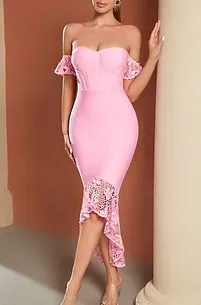
12. The Occasion Dress. The final foundational piece is the one designed specifically for the most formal occasions in your calendar — a gown or floor-length dress in a fabric of genuine quality. This is the piece where momme weight matters for silk, where construction details like French seams and boning channels are visible to an experienced eye, and where the investment is most obviously reflected in the garment longevity. It should serve you across a decade of occasions with minimal alteration.
Reference Framework
The Quiet Luxury Capsule Framework
Source: Luxe Trend Boutique Wardrobe Analysis, 2026
What Fashion Experts Say About the 2026 Shift
The quiet luxury movement is not a single publication editorial position. Across different corners of the industry — consulting, economics, and production — the same observation recurs: consumers are asking different questions than they were five years ago.
“The question used to be what does this say about me? Now the question is how is this made? That is a fundamental shift in the starting point of a purchase decision. When I work with clients building a wardrobe, we spend the first thirty minutes talking about how a jacket is constructed — where the interlining is, whether the seams are finished, what the buttonholes feel like. These are not niche concerns anymore. They are becoming the baseline expectation for anyone spending above a certain threshold.”
— Miranda Holden, fashion consultant and wardrobe strategist
The economic data supports what practitioners are observing in client behaviour. Research time per purchase has increased significantly, and satisfaction rates among consumers who complete that research are measurably higher than among impulse buyers at equivalent price points.
“What we are seeing is not austerity in spending — it is a reallocation of attention before spending. The consumers driving quiet luxury growth are buying fewer pieces but reporting higher satisfaction with each purchase. The average pre-purchase research window for premium garments has grown from under two days in 2023 to over three days in 2025. That additional time translates directly into lower return rates and higher repeat purchase rates within 90 days of the initial transaction.”
— Dr. Priya Nair, fashion economist
From inside the production side of the industry, the shift registers differently — not as a change in consumer psychology, but as a change in what consumers notice when they handle a garment.
“Twenty years ago, I could put a poorly interlined collar on a dress and it would go unnoticed at the retail level. Today I see customers in wholesale showrooms checking the collar stand, running a hand across the seam allowance, looking for the zipper tape. That knowledge was not widespread outside the industry a decade ago. The consumer who understands what a French seam is, and checks for it, is a different kind of buyer — and they are making up a larger share of the premium market every year.”
— Selin Kaya, former luxury pattern-maker and independent construction consultant
Building Your Quiet Luxury Capsule Wardrobe 2026: Five Practical Steps
- Audit before you buy. Before adding a single piece, lay out what you own. Identify which pieces you reach for more than once a week and which pieces have not been worn in six months. The audit tells you where your actual gaps are — not where you imagine them to be.
- Identify your three most frequent dress contexts. Not occasion categories — contexts. Morning meetings. School pickups. Saturday evening dinners. Build toward these three contexts first and treat everything else as secondary.
- Buy the hardest piece first. The hardest piece is the one with the longest lead time for finding the right version — usually the tailored trouser or the structured coat. When you have this piece, the rest of the wardrobe builds more logically around it.
- Set a 30-day hold on anything you are unsure about. If a piece meets your criteria on paper but you are uncertain about fit or colour, do not buy it immediately. Return in 30 days. If you have thought about it multiple times, it belongs in your wardrobe. If you have forgotten it, it does not.
- Track cost-per-wear from the first purchase. Open a note on your phone and record the date and cost of each piece. After six months, divide the cost by the number of times worn. This changes how you feel about the pieces you bought well and clarifies what you will do differently next time.
The Investment Case
A well-made tailored trouser at $180 worn 80 times over three years costs $2.25 per wear. A trend-driven trouser at $45 worn 8 times before it pills or dates costs $5.63 per wear. The quiet luxury investment is, by most measures, the cheaper option — it simply requires a larger sum of money at the point of purchase.
The investment case holds most strongly for the pieces you wear most frequently. A blouse worn twice a week reaches 100 wears in under a year. A coat worn three days a week through winter reaches 120 wears in two seasons. These are the pieces where quality pays the fastest return. The occasion dress, worn less frequently, has a longer payback period — but it also faces no obsolescence risk if the silhouette is chosen correctly. A well-cut gown does not date.
The practical barrier to this logic is front-loaded cost. The wardrobe described in this guide represents a significant investment if purchased all at once. The solution is to buy in stages, starting with the highest-frequency pieces, and to treat the wardrobe as a multi-year project rather than a single shopping session. The quiet luxury capsule wardrobe 2026 is a decision-making framework — one that prioritises construction over novelty, longevity over immediacy, and usefulness over spectacle.